Saturday, July 12, 2014

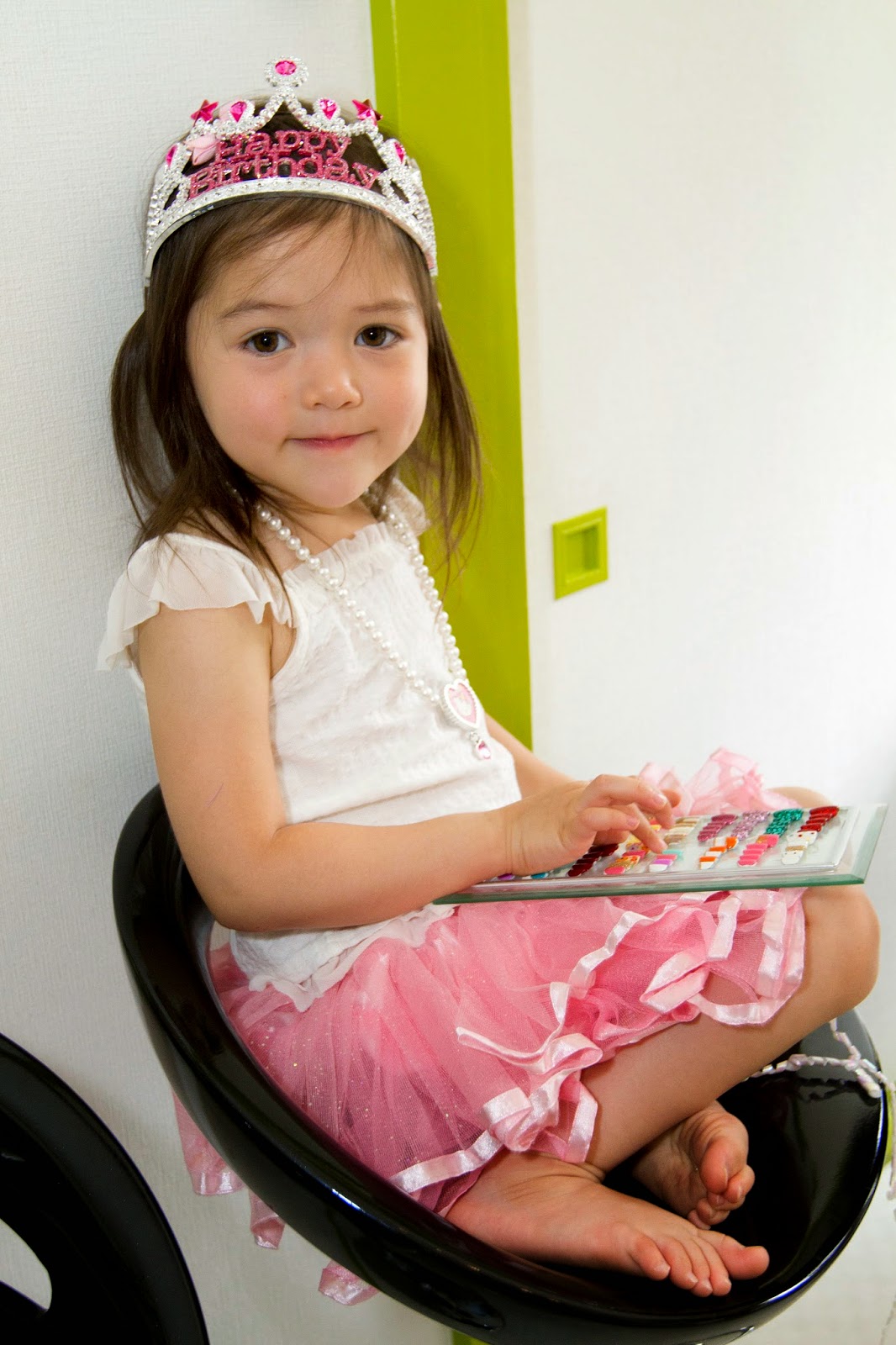
Kid's haircut 1000 yen, homework tutoring, while Mom gets her nails done. SUPER FAB idea.

OK, so if you want a GREAT (I don't mean good, I mean OVER THE TOP AMAZING) manicure, you need to go to JoliNails.

If you have kids and need to relax, go to JoliNails.

You just drop your kiddo off on the 1st floor and go to the 2nd floor to relax and get your nails done. Now, the nail artists at JoliNails are seriously TOP class. They are featured in the top nail magazines in Japan, as well as recently in Nail Mag in the States. The design, nail care, everything is more than you will get anywhere.


And the biggest bonus is, it won't cost you an arm and a leg. Nails start at 3500 yen and for a very nice, designer gel nail, they have monthly specials for under 5000 yen.


And there is even HOMEWORK TUTORING in the childcare section. So, you bring your little one for some one-on-one tutoring, while you relax. Now, talk about a WIN-WIN. (childcare is 950 yen an hour, homework tutoring is 2000 yen). And as a special to salon customers only, your child can have a haircut for 1000 yen, by a very experienced hair dresser, who speaks English and worked in London (i.e. she did a fab job with my curly haired son).


There is also threading, eyelash perms and extensions, IPL hair removal. And you can book with 2 therapists at the SAME TIME to save you time. Have your lashes and nails done together.

The staff speak English. It's American owned. You gotta visit!

You can book online too, so it is easy to make an appointment while you are at work or on the go.

www.joliarts-salon.com

Saturday, June 28, 2014

Many hospitals in Japan won't let you stay with your child at night: Red Cross, Hiro Hospital.


My 21 month son was hospitalized at Hiro Hospital for pneumonia this past week.  I was thankful that he was diagnosed properly, because he was told that it was just a cough at the local clinic.

napping together
He was admitted to Hiro Hospital, which I find has decent care. The only problem I had, was that they would not let me stay the night with him (Red Cross Hospital has the same policy). I tried EVERY ANGLE to get an exception. I said that I am still nursing and he will not take a bottle (which is actually true). I even tried the language barrier excuse, saying that he won't understand the Japanese being spoken to him. Nothing worked. So, I was gently kicked out every night for 4 nights of his hospital stay. The best I could do was nap with him during the day and put him to sleep before I had to leave. But, that didn't mean much, when he woke up without me there at night. :-(

salmon, soup, bean paste, kiwi, tea, rice
In the mornings, the nurses said that he was not doing well "mentally". Well. Let's step back and take a big guess to WHY? In a hospital. Sick. No milk. And, waking up to nurses in a strange metal crib.
Hiro Hospital Pediatric Ward

Other than that hiccup, the health care procedure itself was pristine. The nurses were efficient, like clock-work. And the food they provided was very nutritient rich (although my son refused to eat it).


But, to me, if you want a child to heal, you must nourish the emotional, as well as the physical. Not allowing a parent to stay the night with a scared and sick baby, does not make any sense to me.


Wednesday, June 11, 2014

Nail salon birthday party, in Tokyo, at JoliNails

I wanted to recommend JoliNails, for a nail salon birthday party.
http://www.joliarts-salon.com/#!birthday-party/cjmx


My daughter celebrated her 6th birthday party at JoliNails. They have a party room, which the kids played games and ate cake. The girls went to the nail salon area in pairs, with their mothers for pampering. It was a HIT.

The staff is bilingual and great with kids.

The party room is at JoliArts, www.joliarts.jp the 1st floor of JoliNails Salon, so the staff there are professional instructors and caregivers.


JoliNails

www.joliarts-salon.com
03-6721-9669
Monday closed.
Tuesday-Sunday open 10-8PM

Chess lessons, from international chess master in Tokyo

My husband is REALLY into chess. He is constantly on his phone competing with his friends.

So, here is one I found:

Lessons are 8000 yen a month, once a week, currently Thursdays at 5PM.

The chess instructor is EXCELLENT with children. He recently won a national championship in Japan. He assigns sheet homework, which he creates himself, according to the level of the children.


www.joliarts.jp

Friday, March 14, 2014

Sending a foreign child to a Japanese elementary school

My 6 year old daughter has been attending Japanese kindergarten for the past 3 years.

Here in Japan, kindergartens are separate institutions from elementary school. There is a very formal entrance and graduation ceremony. This past Wednesday, she graduated kindergarten. She was the only complete Westerner in her school.

We had a great experience. 

A couple of notes about Japanese kindergarten (elementary school follows);


Pros:
Great cultural study
Very well-planned programs
Allow children to play
Typically large grounds (especially compared to private international institutions)
Not expensive
Many wonderful programs: field trips, music festivals, singing programs, mother groups, charity events
Your child will learn another language by playing

Cons:
You will need a friend to help you understand all of the school notices

Elementary schools

From April, I have enrolled her in a local public Japanese school. I have been very impressed with the system thus far.


Japanese public school pros:
After-school care is FREE until 5PM.
For the first hour of after school care, teachers will do the homework with your child, so you don't have to worry about it if you don't speak Japanese
Very low cost (I need to get the numbers, but they are only charging small amounts for school lunch, PTA fees, etc.)
School lunch provided
big school grounds
Children obviously get to learn Japanese
Safe
There is a guard at the gates all day long to protect and watch over the kids
Specialist nutritionalists pay extreme care in quality of healthy school lunches
Some schools have uniforms (I'm a fan, but some may see this as a con).

Cons:
Your child will be a minority (some see this as a pro)
English is taught, but for beginner speakers only
You will need to find an after school Japanese tutor (or enroll in free after school care at school) to help child with their homework and Japanese reading (iPhone apps also help)

What we will do to raise a bilingual child
1. Homeschooling for her English education (via Australian national distance education program)
2. Public schooling for her Japanese and social life
3. After school tutoring for both English and Japanese
4. English at home, Japanese at school
5. We keep a mix of friends: international and Japanese, so she is well-balanced
6. We never mix Japanese and English. To us, she is only speaking English. To her teachers, she only speaks Japanese. If she tries to mix a Japanese word into an English sentence, I immediately but gently, correct it. I do not want her to be a lazy speaker


Results:
Both her English and Japanese speaking are native. At this point, I believe that she is more comfortable with English because she requests that videos, books and cartoons be shown in English. Japanese people ask us if she can speak English, so I know that her Japanese sounds native.

We did have a couple instances of school children pointing out that Isabella was not Japanese and poking fun at her for this. We did many long discussions with her, talked to the school, as well as the parents of the children involved. This will happen regardless of where she goes here in Japan, as kids will always point out differences (looks, abilities, body shapes, anything...). We use this as a tool to communicate the importance of differences and how to handle being different. If it ever got to a point of bullying, we may consider different schooling options, but this is not the case.

I will keep you updated and would be happy to share any information on getting your child enrolled into a Japanese public school. It is excellent for a child's growth to be raised bilingually. It builds their brain, social skills, confidence and understanding of cultures. It takes cooperation of the parents and community, but it is rewarding.
Wednesday, February 19, 2014

Keep your comments coming!

I don't know how it happened, but for some reason, I was not seeing the comments that people were making on my blog. I have to apologize because some people were asking me questions, particularly about the hospitals, that I didn't answer.

I found the section on this blog that lists your comments for me to look at, so I'll make a better effort to do so. I really appreciate all of your views and comments. And thank you for your nice words of encouragement. I'll keep blogging about things that I think are useful to life here in Japan.

Sunday, February 16, 2014

Order "safe" milk from Kyushu, free shipping. Amazon.

Here's a link to milk I buy from Kyushu. I think that this will come in handy for those worried about radiation in Japan. It ships for free and will usually arrive in 3-5 days.

¥3300 for twelve, 1000ml cartons.


 Order on Amazon Japan. Shelf life is 90 days.

I typically like to buy things as fresh as possible, but I'd rather the long-shelf life processing, than the potential radiation from the wrong region of Japan. Who's with me here?

It tastes great. Stores well. Far away from the areas of concern.

I thought I'd share this with you all to save you from the frustration I've had for the past couple of years.

I am sick of going to the supermarket to find the "safe" region milk, constantly being sold out.

I hope some of you find this helpful.

Trust me, I'm not crazy. This radiation issue here is real, BUT there are ways to live with it safely.
Safe food and milk is the key.

Click HERE.

If that link does not work anymore, just cut and paste this in any Amazon, Rakuten, or net shopping site here in Japan:

らくのうマザーズ 大阿蘇牛乳